Atmospheric retrievals
Transmission and emission spectroscopy, nested sampling, and multidimensional atmosphere models.
About
My research sits where planetary physics, space observations, and computation meet.
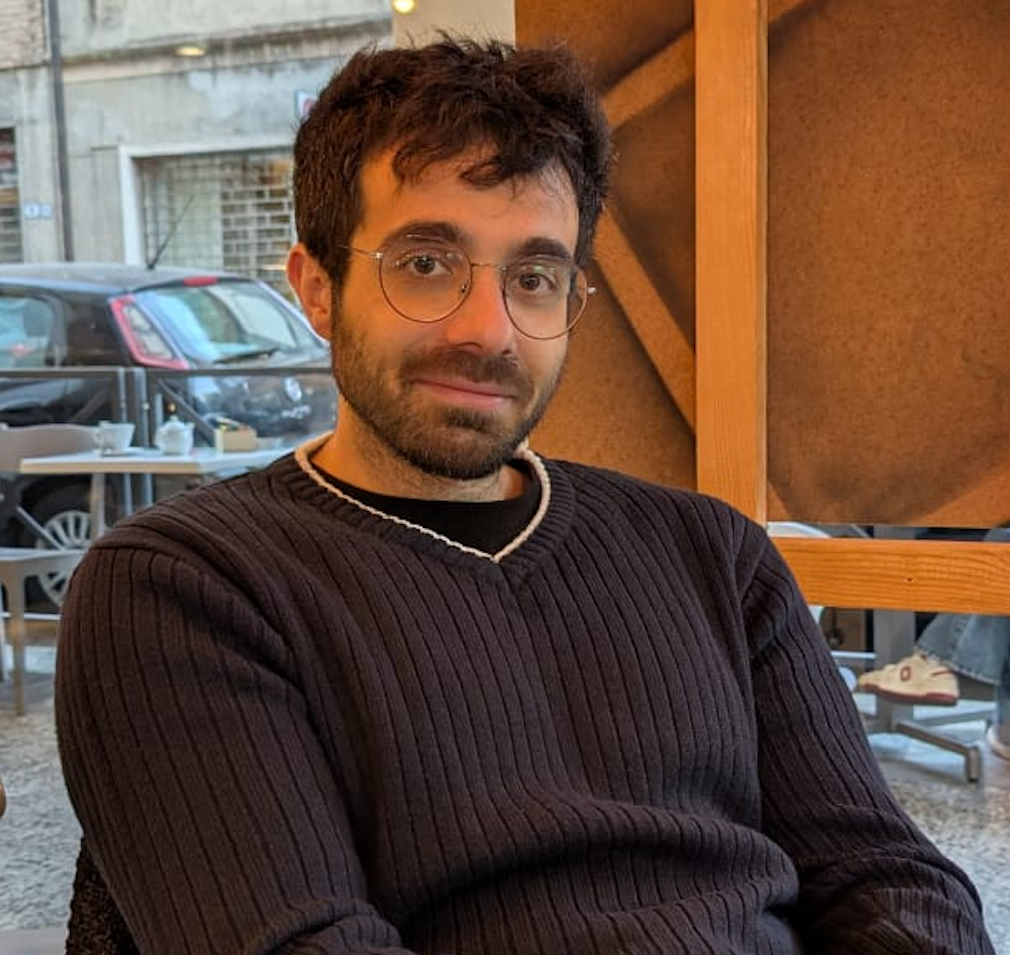
I am a Fixed-term Researcher and Assistant Professor at the University of Padua, specialising in exoplanet atmospheres, stellar systems, and space-mission science.
I combine CHEOPS, TESS, HARPS-N, JWST, Ariel, and PLATO-relevant data with Bayesian inference, multidimensional atmospheric retrievals, machine learning, and quantum-computing methods. The goal is to characterise exoplanets and connect their observed atmospheres with how planetary systems form and evolve.
My path began with physics and astrophysics at the University of Palermo, continued with a PhD at University College London, and expanded through postdoctoral research at CNRS in Bordeaux and the University of Padua. Across those stages, I have worked from target selection and mission planning to atmospheric models and intelligent inference.
“The most interesting questions emerge when the physics, the data, and the method all have to evolve together.”
Research interests
Four connected threads shape my research programme.
Transmission and emission spectroscopy, nested sampling, and multidimensional atmosphere models.
Light curves, radial velocities, stellar activity, Gaussian processes, and transit timing variations.
Deep learning, GANs, transformer acceleration, detrending, and spectral feature recognition.
Quantum algorithms for future exoplanet spectroscopy and photometry.
Missions & consortia
I contribute methods, analysis, and leadership to international collaborations.
Machine learning for light-curve detrending and new-planet discovery in WPs 111000 and 112000.
Target selection, atmosphere studies, and contributions to the MR.Improve and Explore programmes.
JWST observations, atmospheric retrievals, and research on Neptunian planets.
Atmospheric Retrieval and Machine Learning working groups, including 2D models and AI.
Contact
Research collaborations, invited talks, student supervision, and space-mission science.